


Buying a diamond often begins with excitement. Then come the grades, numbers, certificates, and comparisons. Should you choose a larger diamond carat? Is a higher diamond clarity grade worth the price? Or should most of your attention go towards diamond cut? All three matter, but they do not contribute equally to how a diamond looks. Understanding the difference can help you spend thoughtfully rather than simply choosing the highest available grade.
Why Diamond Cut Deserves Priority
Diamond cut has the greatest influence on how a stone interacts with light.
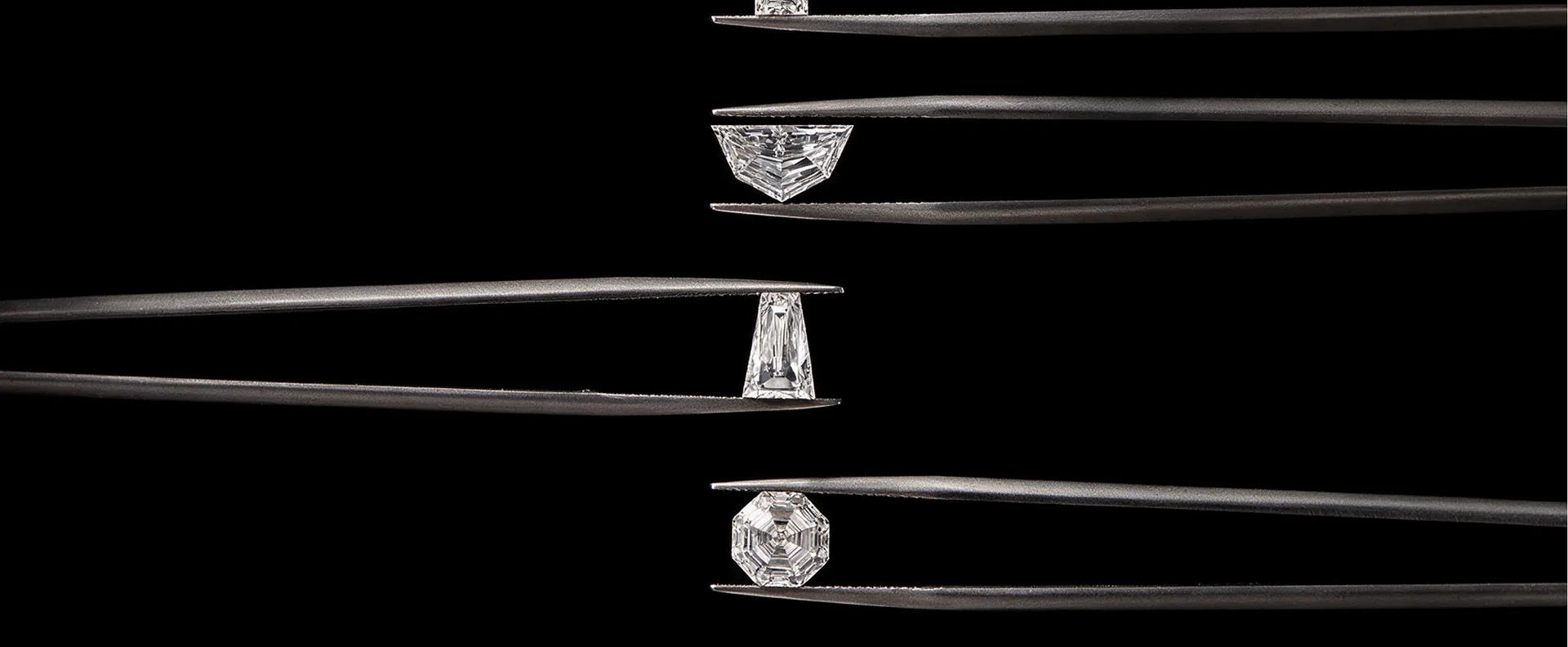
It is often confused with diamond shape, such as round, oval, pear, or emerald. Shape refers to the outline of the stone, while cut describes how well its proportions and facets work together.
A well-cut diamond reflects light with brightness and movement. A poorly cut stone can appear flat or dull, even if it has an impressive carat weight or clarity grade.
Cut can also affect how large the diamond looks from above. Some stones carry more weight underneath, where it cannot be seen after setting. A thoughtfully proportioned diamond may therefore appear more prominent than a heavier stone with less balanced dimensions.
For most buyers, diamond cut is the quality worth protecting first. It is what gives the stone its visual life.
How Much Does Diamond Carat Matter?
Diamond carat measures weight, not visible size.
Two diamonds with the same carat weight may look noticeably different depending on their depth, proportions, and shape. Elongated cuts such as oval, pear, and marquise can also appear larger from the top than some other shapes of a similar weight.
Rather than aiming automatically for the highest diamond carat, consider how the finished piece will be worn.
A larger stone may suit someone who enjoys bold jewellery. A smaller, beautifully proportioned diamond may feel more natural for a person who prefers delicate everyday pieces.
It can also be worth looking just below common milestone weights. A 0.90-carat diamond, for example, may appear close in size to a one-carat stone while leaving more room in the budget for cut quality or a more considered setting.
The right carat is not necessarily the largest one you can afford. It is the one that feels balanced within the design.
Does Diamond Clarity Need to Be Very High?
Diamond clarity describes the inclusions within a stone and the marks that may appear on its surface.
Higher clarity grades mean fewer characteristics, but many of these differences are visible only under magnification. Paying considerably more for an extremely high grade may therefore improve what is written on the certificate without changing what you see in the jewellery.
A practical approach is to look for a diamond that appears clean to the naked eye.
The position of an inclusion can matter as much as its grade. A small mark near the centre may be more noticeable than one close to the edge, where it might be hidden by the setting.
Diamond shape also makes a difference. Brilliant cuts often disguise inclusions through their sparkle, while emerald and Asscher cuts have broad, open facets that may make internal details easier to see.
Clarity should therefore be judged in relation to the individual stone, not selected through a fixed rule.
Where Should Your Budget Go?
For many buyers, the most practical order is:
Diamond cut first, diamond carat second, and diamond clarity third.
This does not mean size and clarity are unimportant. It simply means cut usually creates the most immediately visible difference. A thoughtful balance could include:
- A strong cut that gives the diamond brightness
- A carat weight suited to the design and wearer
- A clarity grade that looks clean without being unnecessarily high
The order may shift depending on the stone. An emerald-cut diamond may need greater attention to clarity, while someone choosing a statement piece may place more value on carat.
The decision should be guided by the complete jewellery piece, not by one number alone.
Look Beyond the Grading Report
A diamond is eventually worn as part of a ring, pendant, bracelet, pair of earrings, or any other way you like. Its setting and design can change how large, bright, or delicate it appears.
A slim band can give the centre stone more presence. A halo may create the impression of greater size. An elongated shape can offer visual impact without requiring a major increase in carat weight.
This is why the highest grades do not always create the most beautiful result.
Sometimes, choosing a slightly lower diamond clarity grade allows you to prioritise a better cut. Staying below a popular diamond carat milestone may make room for craftsmanship or a design that feels more personal.
The aim is not to build the most impressive certificate. It is to choose a diamond that feels beautiful when it is actually worn.
Choosing What Feels Right
Begin with diamond cut because it determines how the stone responds to light. Choose diamond carat according to the scale and personality of the piece. Select diamond clarity based on what is visible rather than pursuing technical perfection.
At Mayavé, a diamond is considered as part of the emotion and story behind the design. Its grades matter, but so do its proportions, character, and the way it feels when it becomes part of someone’s life.
Visit a Mayavé store or browse our online collection to discover thoughtfully crafted lab-grown diamond jewellery designed for your everyday moments, meaningful milestones, and everything in between.
Frequently Asked Questions
1. Does the diamond shape affect how much I should spend on cut?
Yes. Each diamond shape reflects light differently, which is part of what gives it a distinct character. While round brilliant diamonds follow more standardised cut grades, special cuts are best appreciated through their proportions, symmetry and overall brilliance. Mayavé’s signature Trillion, Lily and Hexagonal cuts offer distinctive silhouettes while being thoughtfully crafted to create a beautiful play of light.
2. Can the setting protect a diamond with lower clarity?
A setting may conceal certain inclusions near the edge of a diamond, but it cannot improve the clarity of the stone itself. The jeweller should also confirm that any inclusion does not create a structural weakness, particularly near a corner or pointed tip.
3. Should earrings and pendants have the same diamond grades as rings?
Not necessarily. Earrings and pendants are usually viewed from a greater distance than rings, so very high clarity grades may be less noticeable. For earrings, matching the two diamonds in size, shape, and overall appearance is often more important than choosing the highest individual grades.